
The Uncomplicated Version
Selecting a cask type can be strategically important, not just for the colour and flavour of the whisky
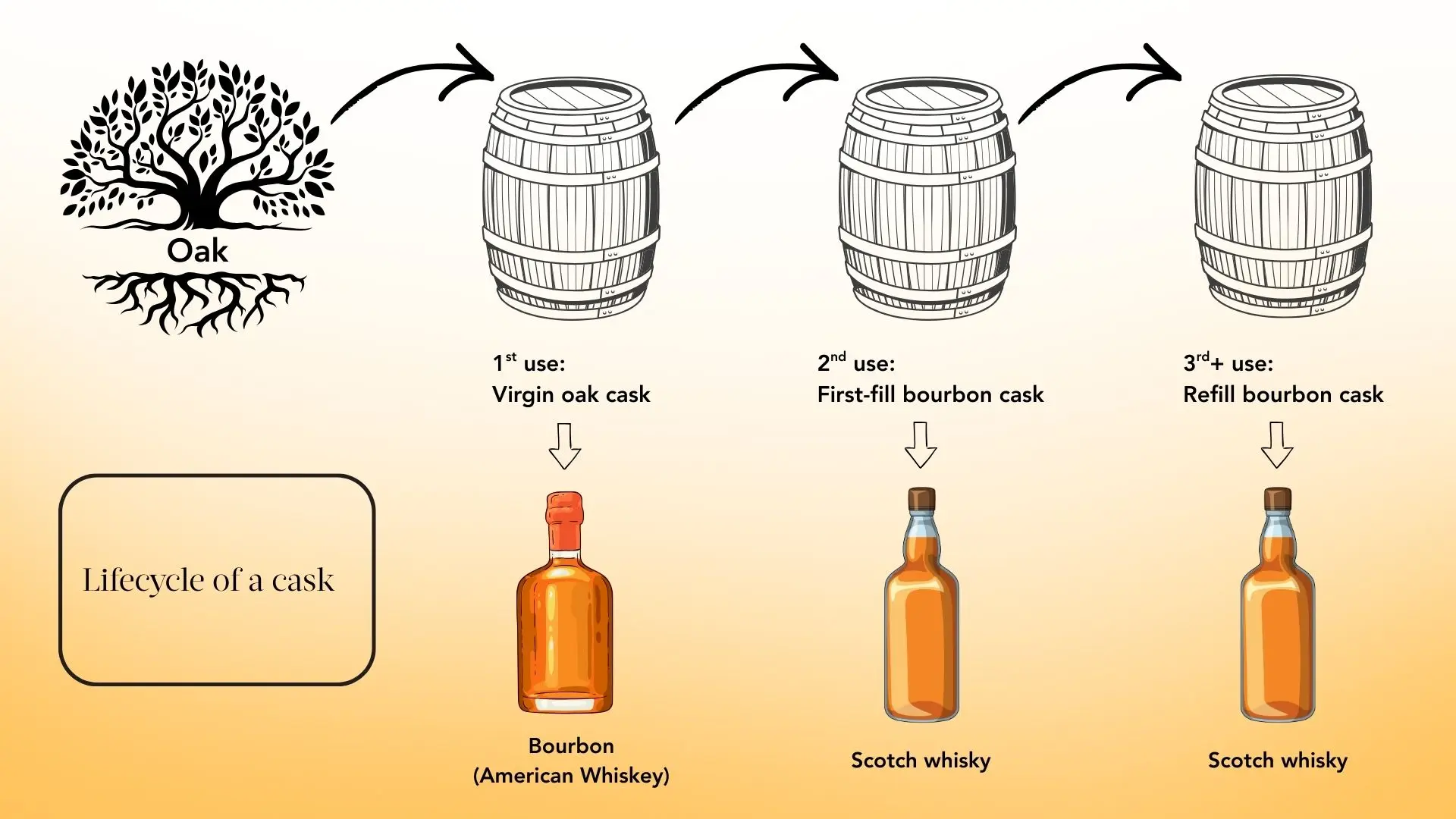
First-fill casks are used to age scotch for the first time. Subsequent maturation is called refill
Refill casks (bourbon in particular) are sometimes regarded as containers, as they are extremely slow to impart flavours to a whisky’s character
Whisky only ages in a cask, but different casks will mature the spirit differently. This is an important consideration whether you are thinking about your cask from the perspective of your personal taste or as an investment.
This article is not intended to explain which specific cask type you should buy, but rather how to consider the options from a high level.
For simplicity, we will assume that there are only four possible types of cask for you to consider: first-fill bourbon, first-fill sherry, refill bourbon, and refill sherry.
Calling a cask "bourbon" or "sherry" indicates the liquid that was originally aged in that wood. Essentially, the characteristics of that liquid have been transferred to the cask. This means that the cask will subsequently transfer some of those characters to the Scotch.
First-fill: Immediately prior to holding Scotch, a first-fill cask contained bourbon or sherry.
Refill: This is not the first time this cask has been used to age Scotch, although the cask originally contained bourbon or sherry.
The diagram below shows the lifecycle of a cask using bourbon as an example. Note that any casks used after the 2nd use are referred to as a refill.
Steps to selecting a cask type
Let’s assume you’re selecting the cask type for whisky that you will age from the first day after distillation.
First, consider how long you plan to age your whisky. Would it be a relatively short time, such as 10 years, or a long maturation, such as 30 years? Next, decide what flavour profile you ultimately want. Finally, determine how much colour you want your whisky to have at the time of bottling.
So which cask type should you choose?
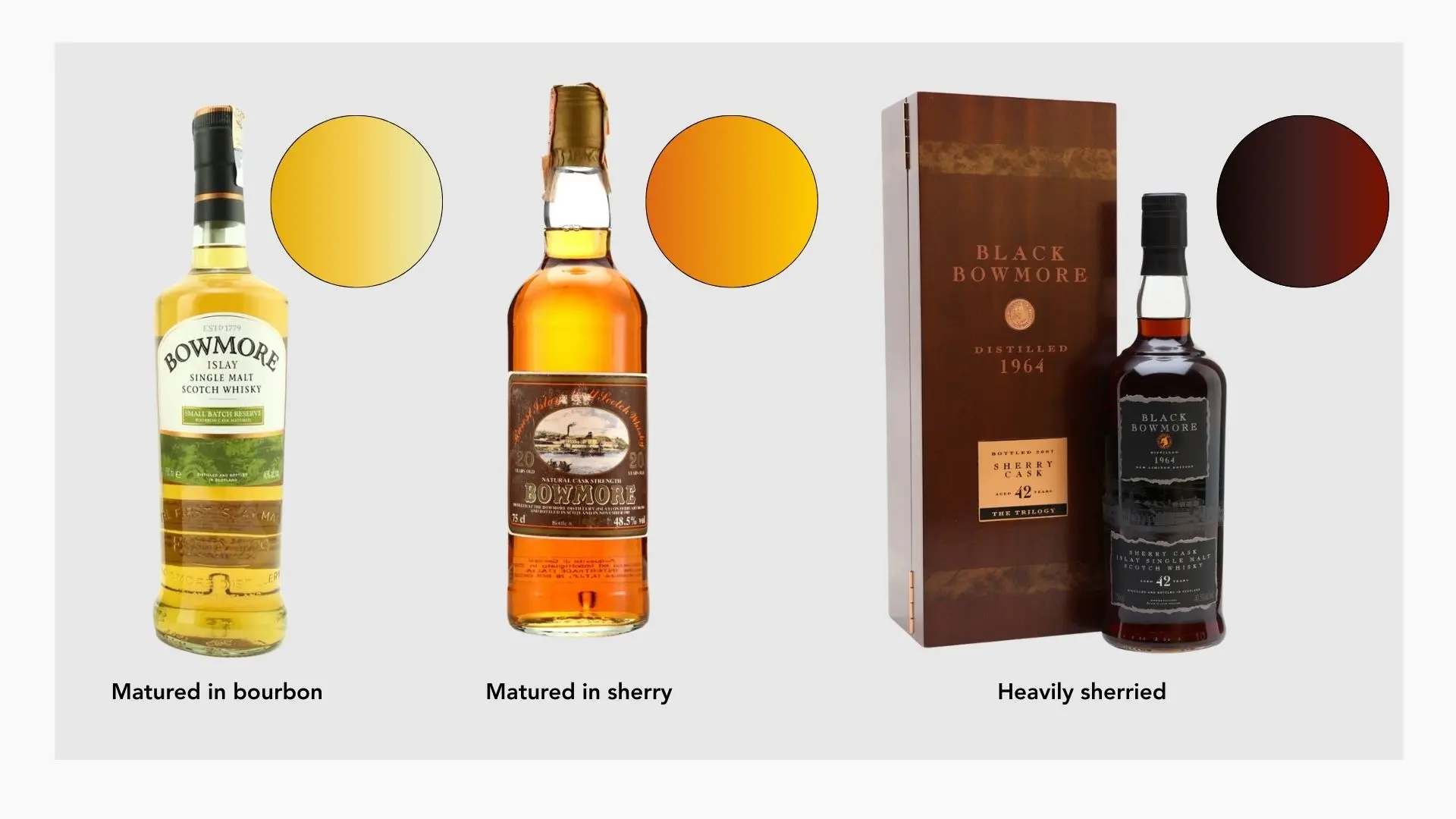
If you want the maximum rich, sherry darkness in the shortest amount of time possible, choose a first-fill sherry cask. If you want the sherry notes to be imparted more smoothly and gradually with a more nuanced flavour, choose a refill cask for a longer duration. You could do the same to calibrate the bourbon notes you would like by using a bourbon cask.
The case for refill bourbons
In our experience, refill bourbon is by far the most common cask type you will see available at almost any age. While there are likely many reasons for this, there are two main reasons that seem plausible and worth considering as a private cask owner.
The first reason is availability. A cask can be used to age whisky several times, but it will only be a first-fill once. As such, the cost of a first-fill cask is higher than a refill because they are less abundant.
The second reason is aging without heavy maturation. Given that whisky only ages when it is in wood, there is an obvious need to store it in wood even when you do not necessarily want the spirit to be strongly influenced by the wood itself. In this case, a refill bourbon cask acts almost like a container for the whisky rather than an influential part of it. This is especially true if it is a fourth-fill cask.
But why would anyone want the wood to have no impact on the flavour of the whisky? For this, it is important to consider that distilleries and independent bottlers alike generally have a carefully planned strategy for future releases. A fourth-fill bourbon cask allows for that flexibility without compromising on the age of the whisky. If you plan to release an 18-year-old whisky from a first-fill sherry cask, you may not want the spirit to have matured in that first-fill cask for the entire duration. This prevents the wood from "over-sherrying" the liquid. Producers might require the flexibility of choosing the wood type later, but they want to be picking from casks that are already aged, though not mature (from the perspective of flavour).
One can only speculate about specific strategies, but it is at least partly for these reasons that refill bourbon casks make up the vast majority of the available options across the market.
Conclusion
This article intends to help you understand some of the nuances surrounding cask selection that are not typically highlighted. While the range of possible considerations is not enormous, it can be consequential, and it is certainly worth understanding some of the fundamentals when you are exploring various options.
For more information or if you’d like to discuss the details about a cask you are considering or already own, reach out to us at +852 6159 8902 or hello@spiritedltd.com.